
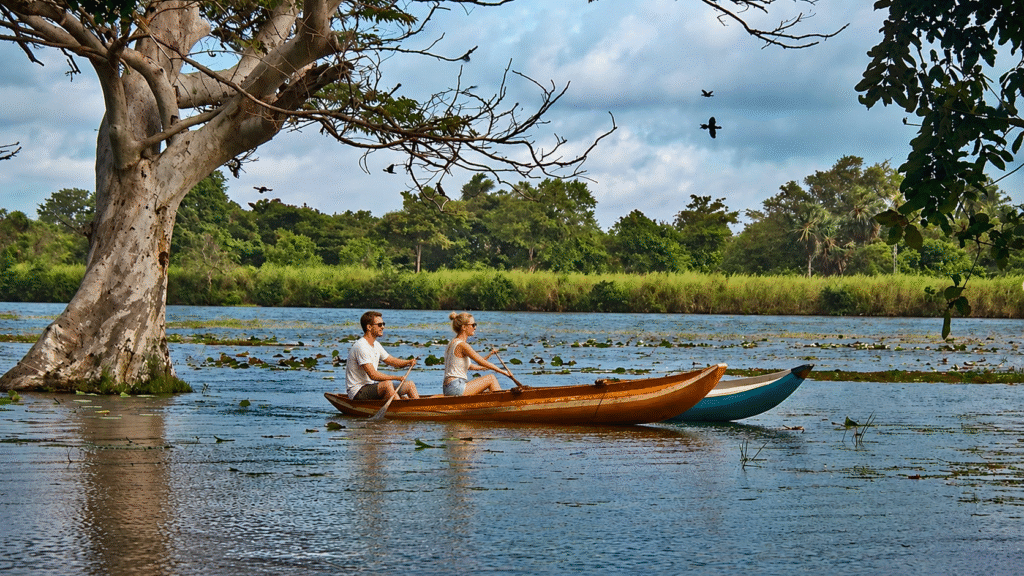
Sigiriya is best known for its ancient rock fortress, but the landscape around it is shaped by something just as important: water.
Lakes, reservoirs, wetlands and traditional village tanks are scattered throughout the region, supporting agriculture, wildlife and local communities. Some are centuries-old irrigation structures, while others have become important habitats for birds and other wildlife.
For visitors, these water bodies offer a different way to experience the Sigiriya area.
Instead of spending the entire day around the major archaeological sites, you can explore the countryside, take a traditional boat ride, watch birds around a reservoir or simply see how ancient water systems continue to influence life in the dry zone today.
Why Are There So Many Lakes Around Sigiriya?
The abundance of lakes in Sigiriya is closely connected to Sri Lanka’s ancient irrigation traditions.
The island’s dry zone receives much of its rainfall seasonally, so storing water has historically been essential for agriculture and settlement. Ancient Sri Lankan kingdoms developed extensive networks of reservoirs, canals and smaller village tanks to collect and distribute water.
Sigiriya itself demonstrates how sophisticated this relationship with water became. The ancient site contains water gardens, pools and hydraulic systems designed to manage and distribute water around the royal complex.
The reservoirs surrounding the wider Sigiriya region are therefore more than scenic places to visit.
They are part of a much older landscape shaped by water management, agriculture and human settlement.
For travellers interested in understanding the region beyond its famous rock, Sigiriya Rock Sri Lanka: History, Height, and Human Ingenuity provides useful context about the engineering and historical significance of the wider site.
Kandalama Reservoir: Water, Forest and Wildlife
One of the most notable bodies of water near Sigiriya is Kandalama Reservoir.
Surrounded by forest and dry-zone landscapes, the reservoir is an important part of the area’s natural environment. Its shoreline and surrounding vegetation provide habitat for birds and other wildlife, while the water itself remains an important resource in the region.
The reservoir is particularly interesting for visitors because it combines several different landscapes in one place.
There is open water, forested shoreline, scrubland and nearby agricultural land. This mixture creates different habitats for wildlife and makes the area useful for nature observation.
Birdwatchers can look for waterbirds around the shoreline, while early morning and late afternoon can offer better conditions for observing wildlife when temperatures are lower.
A visit doesn’t have to be complicated.
Even simply spending time around the reservoir can give you a clearer understanding of how closely nature and human activity are connected in this part of Sri Lanka.
For travellers looking for accommodation and experiences around the wider Kandalama area, Discover the Magic of Sigiriya with Hotel Sri Lanka Kandalama can also provide useful context when planning a stay.
Hiriwadunna Lake: A Village Landscape on the Water
Another interesting option is Hiriwadunna Lake, located near Hiriwadunna village, a short distance from Habarana.
Unlike a large reservoir visited primarily for its scale, Hiriwadunna offers a closer connection to village life. Traditional catamaran rides are one of the best-known experiences here, allowing visitors to travel slowly across the water while observing the surrounding landscape.
The lake is also associated with birdlife, wetlands and other wildlife. Its position within the rural landscape means that a visit can combine nature observation with a glimpse of everyday village activity.
One of the most distinctive features is the view.
Depending on the conditions and location on the lake, visitors can see Sigiriya Rock and Pidurangala Rock rising beyond the surrounding vegetation, creating a completely different perspective of the two famous landmarks.
This makes Hiriwadunna particularly interesting for travellers who have already seen Sigiriya from the usual viewpoints and want to experience the landscape from a lower, quieter setting.
What Wildlife Can You See Around the Lakes?
Water attracts wildlife, particularly in Sri Lanka’s dry zone.
Reservoirs and their surrounding vegetation provide drinking water, feeding areas and shelter for many species. The exact wildlife you encounter depends on the location, season and time of day.
Birds are among the easiest animals to observe.
Herons, egrets, kingfishers, cormorants and other water-associated species can be found around suitable wetland habitats in the Sigiriya and Kandalama area. Migratory birds can also add to the variety during the relevant season.
For a more detailed look at birdlife around the area, birdwatching around Kandalama offers additional information on local bird species and habitats.
Larger animals may also use these water sources.
Elephants, deer and monkeys inhabit the broader landscape around Kandalama and the surrounding dry-zone forests. However, wildlife sightings are never guaranteed, and visitors should observe animals from a safe distance rather than approaching or attempting to feed them.
If wildlife is a major reason for your trip, the lakes can also complement a safari in the surrounding region. Top Things to Do in Sigiriya Sri Lanka can be useful when building a broader list of experiences around your stay.
When Is the Best Time to Visit?
The best time to explore a lake or reservoir depends on what you want to see.
For general sightseeing, early morning is often the most comfortable option. Temperatures are lower, the light is softer and bird activity can be more noticeable.
Late afternoon can also work well, particularly for visitors interested in photography or simply enjoying the landscape when the strongest midday heat begins to ease.
If birdwatching is your priority, seasonal conditions also matter. Kandalama’s varied habitats support resident birds throughout the year, while migratory species can increase the variety during the migration period.
The important thing is to avoid treating a lake visit as something that needs to fill an entire day.
Even a couple of hours can give you a very different perspective on the Sigiriya landscape.
Exploring the Lakes Around Sigiriya
Not every lake around Sigiriya offers the same experience. Some are closely connected to village life and traditional agriculture, while others are surrounded by forests and provide better opportunities for observing birds and wildlife.
That variety makes it worth exploring more than one if you have enough time.
Rather than treating the lakes as isolated attractions, consider them part of the wider landscape that connects Sigiriya’s ancient heritage with its natural environment.
Kandalama for Nature and Birdlife
Kandalama Reservoir is particularly interesting for travellers who enjoy combining scenery with wildlife observation.
The surrounding vegetation provides different habitats for birds, while the open water attracts species that depend on wetland environments. Early mornings are generally a comfortable time to explore, especially if you’re hoping to spot active birdlife.
The area also demonstrates how water continues to shape the relationship between people and nature in the dry zone.
Agricultural land, forest and reservoirs exist alongside one another, creating a landscape that feels very different from the built-up environments around Sri Lanka’s larger cities.
Hiriwadunna for a Village Experience
Hiriwadunna offers a more traditional countryside experience.
A boat ride across the lake can be combined with a visit to the surrounding village, allowing travellers to see paddy fields, home gardens and everyday rural life from a different perspective.
The experience is less about checking another attraction off your list and more about understanding how communities live alongside the water.
It can also be a good option for travellers who want to photograph the landscape. Depending on the weather and time of day, the lake can provide reflections of the surrounding vegetation and distant rock formations.
Ancient Water Systems Still Shape the Landscape
The lakes around Sigiriya are also a reminder that Sri Lanka’s relationship with water is deeply historical.
Ancient kingdoms developed sophisticated irrigation networks to collect, store and distribute water across the dry zone. Reservoirs supported agriculture and helped communities thrive in areas where rainfall could be highly seasonal.
The famous water gardens at Sigiriya provide one of the clearest examples of the engineering knowledge available to the people who built the ancient complex.
But the story doesn’t stop at the archaeological site.
The wider network of tanks and reservoirs shows how water management became part of the landscape itself.
For travellers, this adds another layer to a visit. A lake isn’t simply somewhere to take photographs or ride a boat. It can also help explain why communities developed where they did and how agriculture became possible in a relatively dry part of the island.
Wildlife Watching Around Sigiriya’s Waterways
The lakes and reservoirs can be particularly rewarding for travellers interested in wildlife.
Birds are often the easiest animals to spot, especially around quieter stretches of shoreline and wetland vegetation. Look for movement around the water rather than expecting every species to be immediately visible.
Depending on the location and season, you may encounter herons, egrets, kingfishers, cormorants and other water-associated birds.
The broader landscape can also attract larger wildlife.
Elephants, monkeys and deer inhabit parts of the surrounding dry-zone environment, although sightings around individual lakes are never guaranteed.
If you do encounter wildlife, keeping your distance is essential. Avoid feeding animals, approaching them or attempting to get closer for a photograph.
The goal is to observe the landscape without disturbing the animals that depend on it.
When to Explore the Lakes
Timing can make a noticeable difference to the experience.
Early morning is one of the best periods for exploring. Temperatures are generally more comfortable, bird activity can be higher and the softer light is particularly useful for photography.
Late afternoon is another good option. As the heat begins to ease, the landscape takes on a different character, and the lower sunlight can create attractive reflections across the water.
Midday is usually less comfortable for walking or spending extended periods outdoors, particularly during hotter months.
If you’re planning several outdoor activities during your stay, consider putting the lake experience earlier or later in the day and keeping the hottest hours for indoor activities or a break at your hotel.
How to Include a Lake Visit in a Sigiriya Trip
You don’t need to dedicate an entire day to exploring the lakes.
A few hours can easily fit around the area’s major attractions.
For example, you could visit Sigiriya Rock early in the morning, return for breakfast and some rest, and then spend the afternoon exploring a nearby lake or village.
Alternatively, a lake experience can be a quieter way to begin the day before heading towards the more heavily visited archaeological attractions.
This is particularly useful for travellers staying for several nights. Once you’ve covered the major sights, the surrounding landscape gives you an opportunity to experience a different side of Sigiriya.
It also complements a more relaxed travel style rather than turning every day into a packed sightseeing schedule.
Choosing Between a Lake and a Safari
If wildlife is your main interest, you may wonder whether visiting a lake is worthwhile when you could spend the day on safari.
The two experiences are quite different.
A safari is designed around actively searching for larger wildlife in a national park. A lake visit is slower and more observational. You might spend time watching birds, photographing the landscape or simply seeing how the water fits into village life.
For many travellers, combining both creates a more balanced experience.
A safari gives you the excitement of searching for wildlife, while the lakes offer a quieter look at the ecosystems and communities surrounding Sigiriya.
Respect the Landscape
The lakes around Sigiriya are part of living ecosystems and, in many cases, important resources for local communities.
That means visitors should treat them differently from a conventional tourist attraction.
Avoid leaving rubbish behind, don’t disturb birds or other wildlife, and follow local guidance when taking part in boat rides or village experiences.
If you are photographing people, particularly in rural communities, ask permission before taking close-up photographs.
The most rewarding encounters are often the ones where travellers remain curious without becoming intrusive.
The Secret Life of Sigiriya’s Lakes: Nature, Wildlife and Quiet Escapes
A Quieter Side of the Cultural Triangle
The lakes around Sigiriya offer something that the area’s most famous attractions cannot always provide: time to slow down.
There is no need to climb, queue or follow a fixed route. Instead, you can sit beside the water, watch birds moving through the vegetation, take a traditional boat ride or simply observe the surrounding countryside.
For travellers who have already explored the main archaeological sites, these quieter experiences can add another dimension to a Sigiriya stay.
They also show why the region is much more than a single rock fortress.
A Landscape Shared by People and Wildlife
The reservoirs and village tanks around Sigiriya support more than wildlife.
They are connected to agriculture, farming communities and everyday life. Water stored during rainy periods can support cultivation during drier months, while the surrounding vegetation provides habitat for birds and other animals.
This creates an interesting landscape where cultivated fields, villages, forests and waterways exist close together.
For visitors, it means that a short journey away from the main tourist attractions can reveal a very different side of the region.
You may see farmers working near a paddy field, birds feeding along the edge of a lake or local boats moving slowly across the water.
These aren’t staged attractions.
They’re part of the landscape that surrounds Sigiriya every day.
What to Bring for a Lake Visit
A little preparation can make a lake excursion much more comfortable.
Bring drinking water, sun protection and comfortable clothing suitable for warm outdoor conditions. If you’re planning to spend time walking around the shoreline, comfortable shoes are preferable to sandals that offer little support.
A pair of binoculars can also be worthwhile for anyone interested in birdwatching. Many birds are easier to observe from a distance, and binoculars allow you to appreciate them without approaching their habitat.
A camera with a reasonable zoom lens is useful for the same reason.
You don’t need to get close to wildlife to photograph it.
A Different Perspective of Sigiriya
One of the most enjoyable things about exploring the lakes is seeing familiar landmarks from a different perspective.
Sigiriya Rock can appear beyond fields, trees or water instead of dominating the view from the base of the fortress.
The landscape suddenly becomes much broader.
You begin to see the rock not as an isolated monument, but as part of a much larger environment of forests, villages, agricultural land and waterways.
That wider perspective can make the destination feel considerably more complete.
Make Time for the Less Obvious Experiences
A trip to Sigiriya can easily become focused on the major attractions.
There is Lion Rock to climb, ancient sites to explore and nearby destinations to visit.
But leaving some space for the less obvious experiences can make the journey more rewarding.
A quiet morning beside a reservoir.
A traditional boat ride.
An afternoon watching birds.
A walk through the countryside.
These experiences may not require a full day, but they can provide some of the strongest memories of the surrounding landscape.
For travellers interested in combining relaxation with outdoor experiences, Sigiriya Hotels for Relaxation and Adventure can also be useful when considering how to structure a stay in the area.