Sigiriya to Polonnaruwa: What Can You See Along the Way?
Travelling from one ancient Sri Lankan capital to another makes the Sigiriya to Polonnaruwa journey much more than a simple transfer.
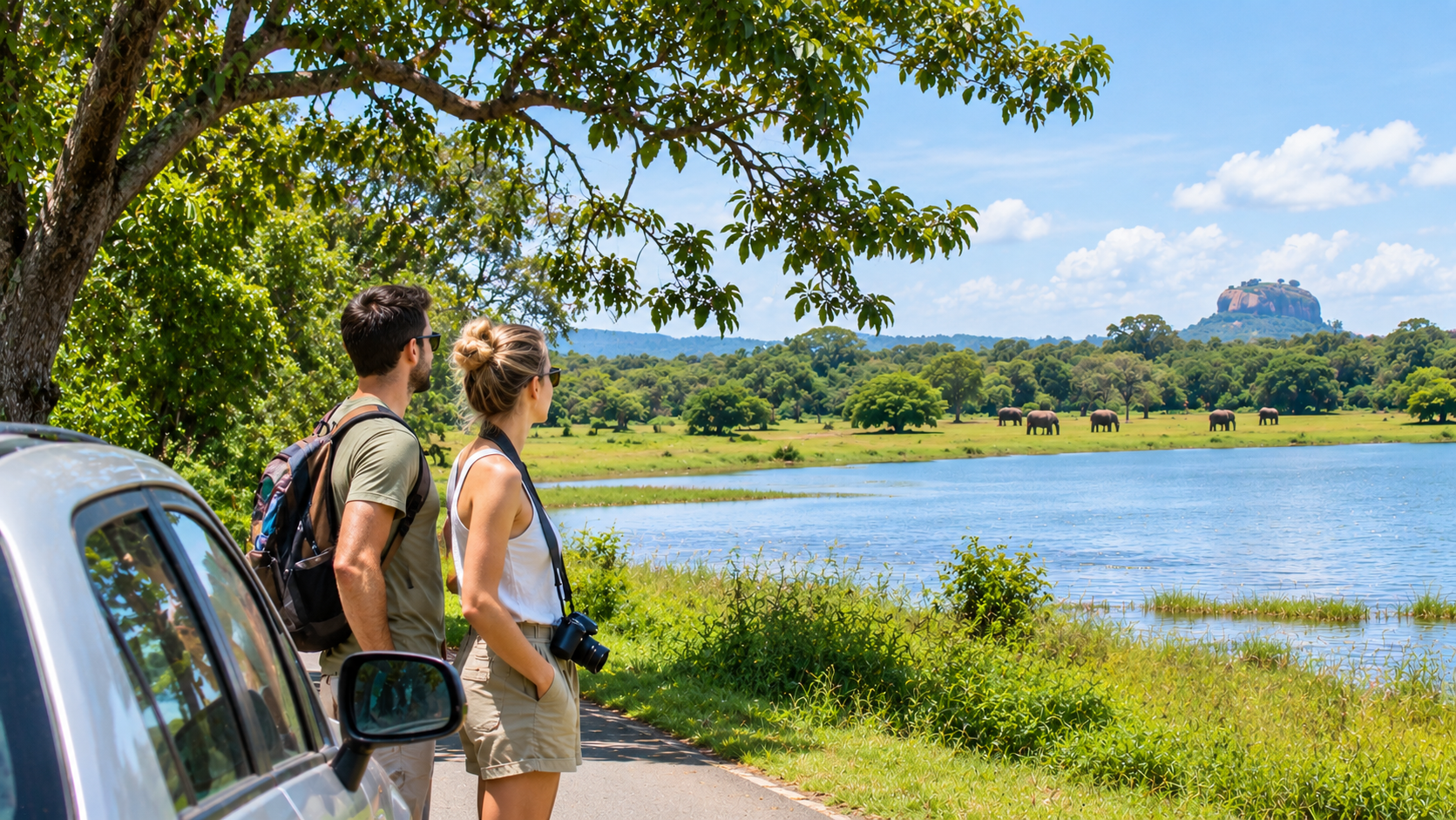
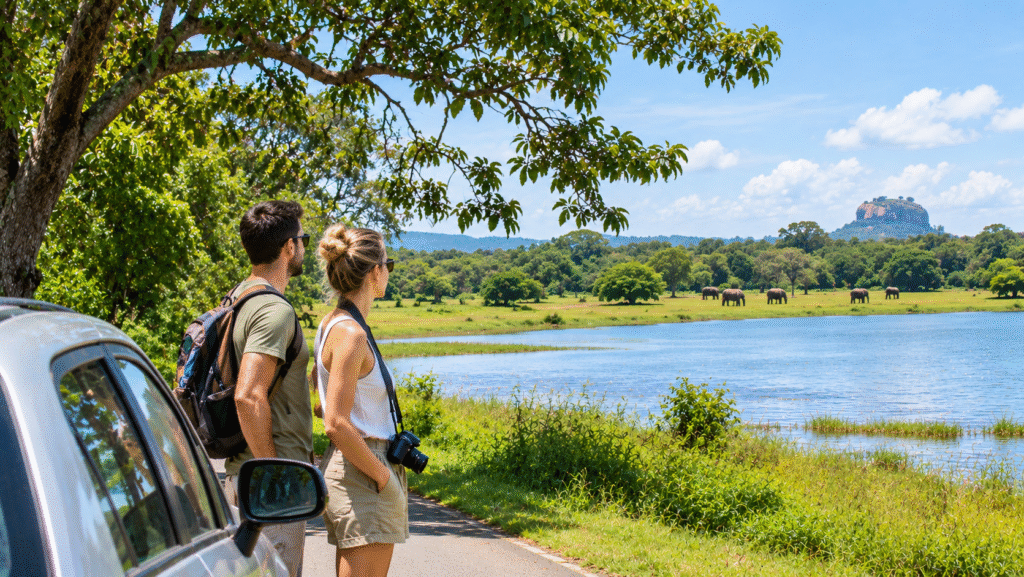
The road runs through Sri Lanka’s Cultural Triangle, passing Habarana and the Minneriya area before reaching the ancient city of Polonnaruwa. Along the way, the landscape shifts between dry-zone forest, reservoirs, villages and wildlife country.
Without stops, the journey is roughly 55–60 kilometres and normally takes around 1–1.5 hours by road. Add a safari or sightseeing, however, and it can easily become a full-day experience.
Leaving Sigiriya
Sigiriya developed into a royal citadel under King Kashyapa I in the fifth century. Its surviving water gardens, boulder gardens, defensive structures and summit ruins make it one of Sri Lanka’s UNESCO World Heritage Sites.
Before leaving the area, travellers interested in its design can explore Sigiriya Water Gardens and learn how water became part of the ancient landscape.
From Sigiriya, the journey heads towards Habarana before continuing east towards Polonnaruwa.
Habarana: The Crossroads of the Cultural Triangle
The town functions as an important road junction for travellers moving between Sigiriya, Dambulla, Polonnaruwa, Trincomalee and nearby wildlife areas.
Around Habarana, the scenery is noticeably rural. Forest, small settlements, cultivated land and ancient reservoirs form part of a landscape that has been shaped by people and wildlife for centuries.
For most travellers on the Sigiriya to Polonnaruwa route, Habarana is a useful passing point rather than a long sightseeing stop.
Minneriya National Park
Located between Habarana and Polonnaruwa, the park protects dry-zone forest and the catchment surrounding the ancient Minneriya Tank, which was constructed during the reign of King Mahasen in the third century AD.
During the dry season, falling water levels expose fresh grass around the reservoir. Elephants from the surrounding landscape move towards the tank to feed, creating the seasonal spectacle commonly known as the Gathering.
The largest concentrations are generally associated with the dry-season months, but elephant movements change with rainfall and water availability. At other times, herds may be found in neighbouring wildlife areas such as Kaudulla or Hurulu.
Ancient Reservoirs and Dry-Zone Landscapes
Water is one of the most interesting themes connecting Sigiriya and Polonnaruwa.
The Cultural Triangle contains reservoirs, canals and other elements of irrigation systems developed over many centuries to support settlements and agriculture in Sri Lanka’s dry zone.
Minneriya Tank is one example encountered along this route.
At the other end of the journey is the enormous Parakrama Samudra at Polonnaruwa, closely associated with King Parakramabahu I.
Arriving in Polonnaruwa
Polonnaruwa became Sri Lanka’s second capital after Anuradhapura and developed into an important medieval city.
UNESCO describes the site as containing monuments built during the Chola period as well as the remains of the remarkable garden-city created under Parakramabahu I in the 12th century.
What Should You See in Polonnaruwa?
One of the most famous sites is Gal Vihara, where four Buddha images were carved from a long granite rock face.
Another major area is the Sacred Quadrangle, a compact collection of religious structures that includes the circular Vatadage.
The remains of the Royal Palace of Parakramabahu I reveal the scale of the former royal complex, while large stupas and monastic structures are found farther through the ancient city.
Then there is Parakrama Samudra, the vast reservoir beside Polonnaruwa that remains one of the most striking examples of the region’s historic relationship with water.
Can You Visit Polonnaruwa and Minneriya on the Same Day?
Yes, but the day needs to be planned carefully.
An early departure from Sigiriya allows time to explore Polonnaruwa before the strongest midday heat. A wildlife safari can then be added later in the day.
Another option is to dedicate most of the day to Polonnaruwa and visit Minneriya separately. This gives the archaeological site more time and avoids rushing between two very different experiences.
Conclusion
The Sigiriya to Polonnaruwa route connects two of Sri Lanka’s most important UNESCO-listed ancient cities through a landscape filled with forests, reservoirs and wildlife habitats.
Habarana provides the crossroads, Minneriya introduces the natural side of the Cultural Triangle, and Polonnaruwa reveals the scale of Sri Lanka’s medieval civilisation.
Rather than treating the journey as a transfer between two attractions, allowing extra time turns the road itself into part of the experience.