What Happened to Sigiriya After King Kashyapa?
Sigiriya’s most famous chapter lasted for less than two decades.
King Kashyapa I transformed the enormous rock and surrounding landscape into a royal capital during his reign from 477 to 495 CE. Yet the palace, gardens and fortifications visitors see today are only one period in a much longer story.
So what happened to Sigiriya after King Kashyapa?
Kashyapa’s Final Battle
The end of Kashyapa’s Sigiriya began with a royal conflict.
Kashyapa had taken power from his father, King Dhatusena, while his half-brother Moggallana fled to India. Sigiriya subsequently became Kashyapa’s capital and royal residence.
In 495 CE, Moggallana returned with an army to challenge him.
According to the traditional account, Kashyapa rode into battle on an elephant. When the elephant changed direction, Kashyapa’s soldiers apparently interpreted the movement as a retreat. His forces broke formation, leaving the king facing defeat.
Kashyapa then took his own life.
Moggallana became king, bringing Sigiriya’s short period as a royal capital to an end.
For more background on the extraordinary city Kashyapa created, explore Sigiriya Rock Sri Lanka: History, Height and Human Ingenuity.
The Capital Returned to Anuradhapura
One of the biggest changes after Kashyapa’s defeat was political.
Sigiriya had become important because Kashyapa had established his capital there. After Moggallana took the throne, the centre of royal power returned to Anuradhapura.
That meant Sigiriya no longer needed to function as the fortified royal city Kashyapa had created.
Sigiriya Became a Monastic Centre Again
Understanding what happened to Sigiriya after King Kashyapa requires looking even further back.
Buddhist monks had used the Sigiriya landscape long before Kashyapa arrived. Rock shelters around the site contain drip ledges and inscriptions associated with monastic occupation dating back to around the third and second centuries BCE.
After Kashyapa’s death, Sigiriya returned to this religious role.
Visitors Were Still Coming to Sigiriya
Sigiriya did not disappear from people’s lives when its kings left.
From around the sixth century onward, visitors came to see the site, including its paintings. Some recorded their reactions by writing verses on the highly polished wall now known as the Mirror Wall.
These inscriptions are the famous Sigiriya graffiti.
This makes the graffiti especially important. It shows that post-Kashyapa Sigiriya was not simply an empty ruin hidden in the forest.
The royal city had become a place people travelled to see.
What Happened to Kashyapa’s Palace?
Buildings gradually deteriorated. Timber and other vulnerable materials disappeared, while brick foundations, stonework, pools, stairways and sections of the sophisticated landscape survived.
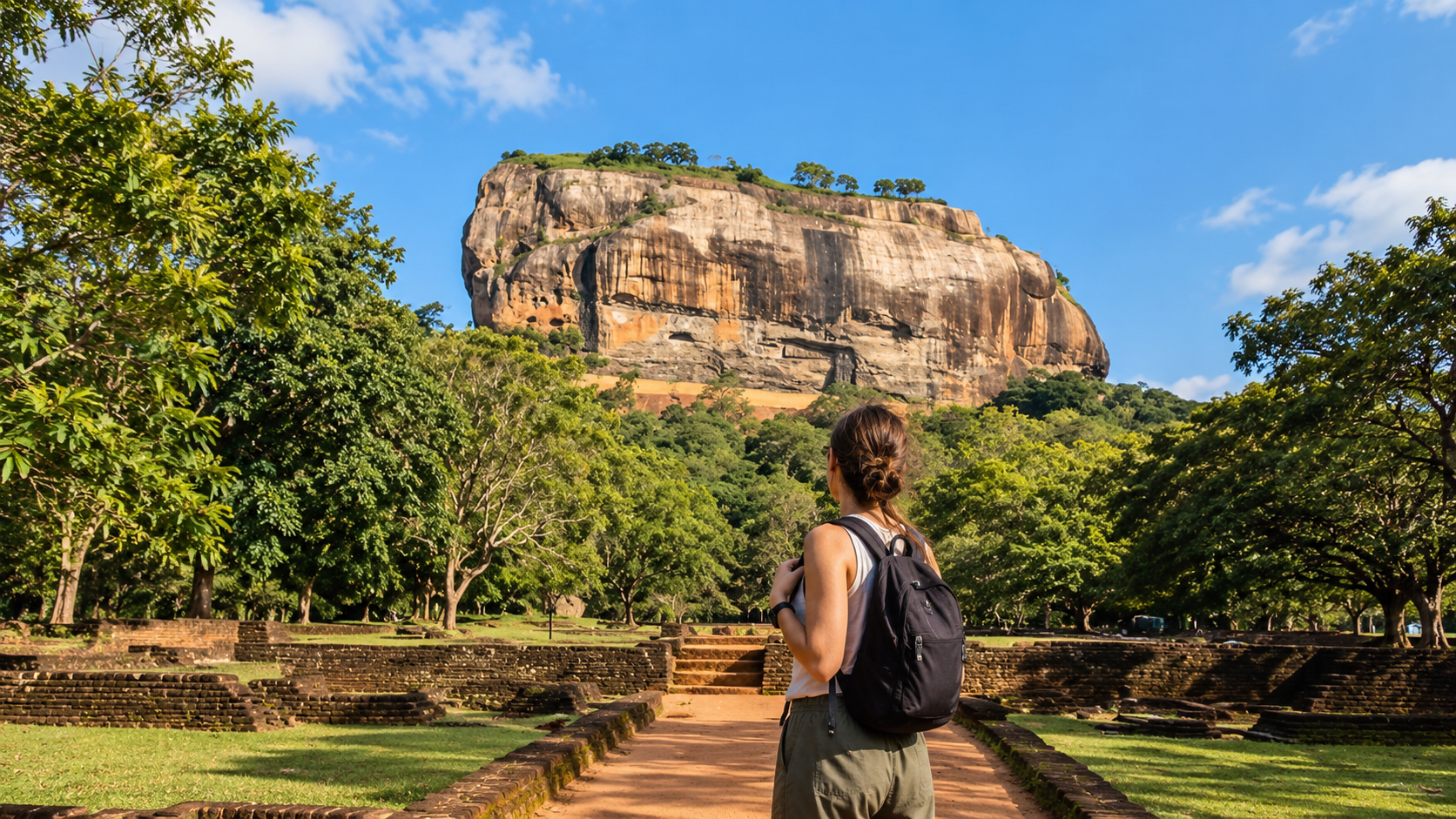
Today, the summit contains the remains of the royal palace rather than an intact building.
Below it, however, the layout still reveals the remarkable planning behind Kashyapa’s city.
The Sigiriya water gardens are particularly important because their pools, channels, fountains and underground water systems demonstrate how advanced the royal landscape had been.
When Was Sigiriya Abandoned?
There is no single moment when every part of Sigiriya suddenly became deserted.
Historical and archaeological evidence instead points to a gradual decline.
Its monastic and urban importance continued for centuries after Kashyapa, before the site fell increasingly out of use around the 13th–14th centuries.
Sigiriya Was Used Again
Even after its medieval decline, Sigiriya’s story was not completely finished.
Evidence indicates that the site later served as a military outpost associated with the Kandyan Kingdom during the 17th and 18th centuries.
This is another reason the history of Sigiriya cannot be reduced to Kashyapa’s 18-year reign.
Travellers exploring this wider historical landscape can also visit nearby Dambulla. This Cultural Triangle guide provides more context for exploring Sigiriya and its surroundings.
From Forgotten Ruins to World Heritage Site
Interest in Sigiriya increased again during the 19th century as antiquarians began documenting and investigating the site.
Sigiriya’s importance was eventually recognised internationally when the Ancient City of Sigiriya was inscribed on the UNESCO World Heritage List in 1982.
Today, visitors can still walk through the water gardens, pass the Mirror Wall and Lion Gate and climb to the remains of Kashyapa’s summit palace.
Those planning to spend more time in the area can also compare where to stay near Sigiriya when exploring the wider Cultural Triangle.
Conclusion
Its life as a royal capital ended almost immediately, but Sigiriya itself did not.
The political centre returned to Anuradhapura, while Sigiriya resumed its older connection with Buddhist monastic life. Monks occupied the landscape, visitors came to admire its paintings, and people left poems on the Mirror Wall.
Centuries later, the site gradually declined and was largely abandoned, before seeing later military use and eventually becoming the focus of archaeological study.